2026-2027 Concert Season
“The earth has music for those who listen.” William Shakespeare

-
Hear composer Chris Thomas speak about his inspiration in creating this piece. The Malheur Symphony was commissioned in 2018 by the Central Oregon Symphony with the goal to bring healing to the community after the armed takeover in 2016.

-
Thomas visited the refuge to find the heart of the Malheur story. He met with representatives from the Paiute Tribe, Friends of Malheur Society, geologists, biologists, and dozens of birders.
-
He notes: "I am acting more as a painter than composer, shaping the music with bird calls, bird speech patterns, and pre-recorded sounds to capture the essence of Malheur."
September 26 & 27
Weber - Freischütz Overture
Dvorak - In Nature’s Realm
Thomas - Malheur Symphony
-
You will hear these sounds and see the images from photographers Kay Scheurer Steele and the late Terry Steele in a multi-media performance.
-
Environmental Fair: Starting an hour before the concert, come visit organizations promoting environmental awareness and stewardship.
-
Saturday, Sept. 26 at 7 p.m.
-
Sunday, Sept. 27 at 4 p.m.
-
Ashbrook Independent School, Corvallis
Listen to the birds tell their story:

* WVS thanks the Braemer Charitable Trust under Trust Management Services for their generous grant sponsoring this concert.

November 21 & 22
Smythe - Wreckers Overture
Brahms - Symphony 3
Sibelius - Violin Concerto in D minor
-
Saturday, Nov. 21 at 7 p.m.
-
Sunday, Nov. 22 at 4 p.m.
-
Ashbrook Independent School, Corvallis
“Music is the heart of life. Without it, there is no possible good and with it everything is beautiful.” Franz Liszt
-
Johannes Brahms' Symphony No. 3 is a masterpiece of balance: structurally robust yet lyrical, grand in scope yet intimate. Composed swiftly in Wiesbaden in 1883, it reflects Brahms at the height of his powers, combining intellectual rigor with emotional depth.
-
Jean Sibelius only composed one concerto: considered one of the most challenging for violin. “I wanted to be a celebrated violinist,” Sibelius told a friend. “From the age of 15, I played my violin for ten years practically from morning to night. I hated pen and ink and preferred an elegant violin bow...it was a very painful awakening when I had to admit that I had begun my training for the exacting career of an eminent performer too late.” Instead, Sibelius became the most celebrated composer from Finland.
-
Anthea Kreston did indeed start her performing career early, having picked up the violin at age 2. She says: "From Tajikistan to Carnegie Hall, I have dug deep into all that a career as a classical musician can offer. Training at the Curtis Institute of Music, performing with Yo-Yo Ma, and as a member of Berlin’s Artemis String Quartet, I have travelled the world and continue to be amazed at all that life has to offer." Kreston is also a writer and her new book, Crescendo: Chronicles of an Adventurous Violinist is available on Amazon. She also can be heard on All Classic Radio, as she was named Artist in Residence for 2026-27.

Shane Ong, one of our 2025 concerto winners
February 6 & 7
Offenbach - Orpheus in the Underworld
Youth Concerto and Composition Competition winners
Elgar - Alassio Overture
-
Saturday, Feb. 6 at 7 p.m. at Albany Performing Arts Center
-
Sunday, Feb. 7 at 4 p.m. at Ashbrook Independent School, Corvallis
"In music, there is a beautiful refuge where no boundaries exist. For the young, it is the highest form of freedom and joy." Helen Keller
This is likely the orchestra's and audience's favorite concert every season. We perform with 3 winners of our concerto competition, as well as pieces written by young composers. It is an inspiring experience to see young performers perform at the such a high level.
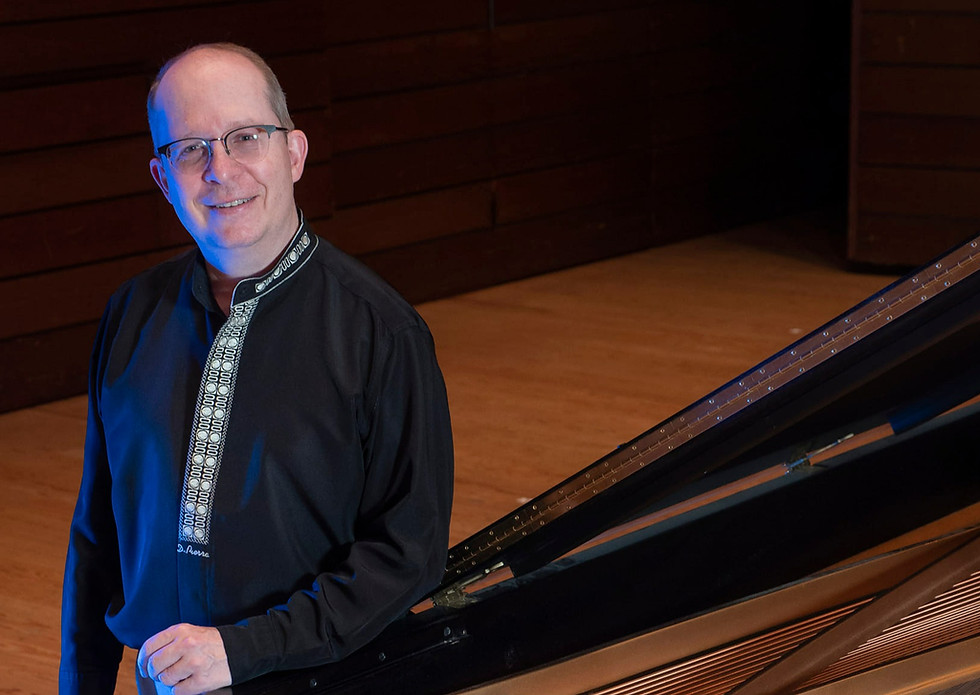
Alexander Tutunov
March 20 & 21
Beethoven - Egmont Overture
Tchaikovsky - Sleeping Beauty Suite
Tchaikovsky - Piano Concerto No. 1
-
Saturday, Mar. 20 at 7 p.m.
-
Sunday, Mar. 21 at 4 p.m.
-
Albany Performing Arts Center
“Music can name the unnameable and communicate the unknowable.”
— Leonard Bernstein
-
Tchaikovsky's Piano Concerto No. 1 is dramatic, lyrical, and emotional: it is a masterpiece that almost never happened. Rejected by his own mentor as "unplayable," this colossal work went on to become the most celebrated piano concerto in history. From the iconic opening brass chords to the lightning-fast keyboard acrobatics of the finale, it is thrilling for both soloist and orchestra.
-
Alexander Tutunov is considered one of the most outstanding virtuosos of the former Soviet Union. He maintains a busy performing schedule worldwide as a recitalist, soloist with orchestra, and on radio and television.
-
He now lives in Ashland, where he is Professor of Piano and Artist in Residence at Southern Oregon University.
"Film is like a dream...Without music, a film is a body without a pulse." Ingmar Bergman
-
Joe Hisaishi is one of Japan’s most celebrated composers, renowned for creating the emotional heartbeats of iconic animated and live-action films. Hisaishi blends minimalist structures, classical orchestration, and deeply nostalgic melodies to craft unforgettable sonic landscapes.
-
Departures (Okuribito): The main theme for this Oscar-winning film highlights Hisaishi's mastery of the cello. It features a deeply moving, melancholic, yet ultimately uplifting melody.
-
Howl’s Moving Castle (Merry-Go-Round of Life): This whimsical, sweeping orchestral waltz serves as the main theme for the Studio Ghibli classic. It utilizes shifting dynamics and tempos to evoke a sense of magical wonder, romantic longing, and the chaotic nature of adventure.
-
John Williams is one of the most celebrated composers of our time, whose music has become an enduring part of our shared cultural experience. From the sweeping themes of Star Wars to the deeply moving score for Schindler’s List, Williams has an extraordinary ability to tell stories through music—capturing adventure, hope, courage, and profound human emotion. He has earned numerous Academy Awards, Grammys, and other honors, making him one of the most influential composers in modern film history.
-
Our soloist, Jason Duckles, will help bring Hisaishi's pieces to life. Duckles is a prominent cellist known for his extensive work as a chamber musician. He is a founding member of the Amelia Piano Trio, which has toured extensively across the United States and internationally. Duckles has performed in prestigious venues worldwide, including Carnegie Hall, and WVS is fortunate to have performed with him several times.


May 22 & 23
Joe Hisaishi
John Williams - Star Wars Suite
Joe Hisaishi - Departures (Jason Duckles, cello)
Joe Hisaishi - Howl’s Moving Castle
John Williams - Schindler’s List (Jason Duckles, cello)
Jason Duckles
-
Saturday, May 22 at 7 p.m.
-
Sunday, May 23 at 4 p.m.
-
Ashbrook Independent School, Corvallis
Our Performance Venues
Ashbrook Independent School
4045 SW Research Way
Corvallis, Oregon
Ashbrook Independent School in Corvallis is a small, intimate hall with great acoustics. This is a very friendly environment where you will be close enough to the music to easily see and hear everything that happens onstage.
Our concert facilities are handicapped accessible.
Ushers are available at each concert to assist our patrons.
Albany Performing Arts Center (West Albany High School)
2100 Elm Street, SW
Albany, Oregon
The Willamette Valley Symphony is happy to offer concerts at West Albany High School in addition to Ashbrook Independent School. This new auditorium is state-of-the-art, and we look forward to being among the first ensembles to make music in this beautiful facility.
Frequently Asked Questions
Generally, yes! However, it may depend on the concert and on the age of your children. Many standard-length classical concerts require an attention span that is difficult for very young children to maintain. We rely on your good parental judgment as to whether or not your child will enjoy the concert. When you do attend a symphony concert as a family, try to sit up close to the orchestra, so your children will have a great view of everything that’s going on. Young children are especially intrigued by the many different instruments of the orchestra and the way they are played.
To further build your children’s interest in classical music, play classical radio or CDs around the house.
We encourage families to attend by offering a FREE ticket to all youth under the age of 18.
Expect to enjoy yourself! This is the time to let go of any preconceptions you may have about classical music or the concert experience. If you feel a little nervous, that’s OK. Some things about the concert may seem strange because they’re new to you, but if you just focus on the music, you’ll have a great time.
Open yourself up to the music. Let it trigger your emotions – maybe even your memories. Feel the rhythms; follow the tunes. Watch the musicians and the conductor, and see how they interact with each other. Notice how the music ebbs and flows—surging and powerful at some times, delicate and ephemeral at others, and everything in between.
You might! Classical music is all around us: in commercials, movie soundtracks, television themes, cartoons, retail shops, and even some elevators! Popular music often quotes classical melodies, too. While you’re listening in the concert to a piece you think you’ve never heard before, a tune you’ve heard a hundred times may jump out at you.
Whether or not you’ve heard the music before the concert, as you listen, you’ll notice that each classical piece uses its own group of several tunes over and over, in different ways. You’ll start to “recognize” these melodies as a work progresses. Listen for the ways a melody is repeated: Is it exactly the same as the first time, or with a different character? Is it played by the same instruments, or different ones? Does it start the same as before, but go off in a different direction? Or start differently and surprise you by developing into the tune you recognize from earlier in the piece?
There is no dress code! Anything that makes you feel comfortable is fine. Many people will be wearing business clothes or slightly dressy casual clothes, but you’ll see everything from khakis or jeans with a nice shirt to cocktail dresses and suits. Some people enjoy dressing up and making a special night of it, and you can, too.
If you do decide to dress up, though, go easy on the perfume and cologne, which can distract others near you and even prompt them to sneeze (which may distract you)!
Absolutely! Plan to arrive 20 minutes before concert time, so you can find parking, find your seat, turn off your cell phone, take a look at your surroundings, absorb the atmosphere, and have time to glance through the program book, too. You won’t be alone. Most concertgoers make a point of coming 45 minutes early to take part in the informal pre-concert talk given by the conductor.
And there’s another good reason to come early: Most concerts start on time. If you’re late, you may end up listening from the lobby! If that happens, the usher will allow you inside during a suitable pause in the program, so your arrival won’t disturb other concertgoers.
It varies, but most orchestra concerts are about 90 minutes long, with an intermission at the halfway point.
This is the number-one scary question! No one wants to clap in the “wrong” place. But it’s simpler than you may think.
At the beginning of the concert, the concertmaster will come onstage. The audience claps as a welcome, and as a sign of appreciation to all the musicians.
After the orchestra tunes, the conductor (and possibly a soloist) will come onstage. Everyone claps to welcome them, too.
Then everything settles down and the music begins. The audience doesn’t usually applaud again until the end of each piece.
In most classical concerts – unlike jazz or pop – the audience doesn’t usually applaud during the music. They wait until the end of each piece, then let loose with their applause. But this can be a little tricky, because many pieces seem to end several times – in other words, they have several parts, or “movements.” These are listed in your program.
In general, musicians and your fellow listeners prefer not to hear applause during the pauses between these movements, so they can concentrate on the progress from one movement to the next. Sometimes, though, the audience just can’t restrain itself, and you’ll hear a smattering of applause – or a lot of it – during the pause before the next movement. It’s perfectly OK to join in if you enjoyed the music, too.
At the end of the piece, it’s time to let yourself go and let the musicians know how you felt about their playing. Many pieces end “big” – and you won’t have any doubt of what to do when! Some end very quietly, and then you’ll see the conductor keep hands raised for a few seconds at the end, to “hold the mood.” Then the hands will drop, someone will clap or yell “Bravo!” – and that’s your cue. If you enjoyed what you heard, you can yell “Bravo!” too.
Turn it off! The same goes for pagers and alarm watches. It’s a good idea to double-check in the few minutes before the concert begins, and again as intermission draws to a close. Better still, leave them at home or in the car if you can.
Doctors and emergency workers who are “on call” should put their pagers or cell phones on “vibrate”.
Cameras, video recorders, and tape recorders are not permitted in concerts. If you have a camera and want a souvenir of a special evening at the symphony, it can be fun to ask someone to take your picture outside the concert hall before you go in, in the lobby, or with one or some of the performers following the concert.
It’s a short rest period for the musicians and conductor – once you see how much activity goes into a performance, you’ll understand why they need a break!
Listening to music is also an intense activity (even if considerably less physical), and a break in the middle helps the audience concentrate better in the second half. Rarely, a concert will have no intermission because it would interrupt the flow of a long work. Check the program before the concert so you know what’s coming.
Most intermissions are fifteen to twenty minutes long, which gives you time to socialize with your companions, get a drink of water in the lobby, visit the facilities, or simply sit in your seat and read the program notes. Do whatever puts you in a good frame of mind to hear the second half of the concert.
